Chapter 1 — What self-assembly looks like
Self-assembly means: parts + interaction rules + environment → ordered structure, without a person placing every piece by hand.
Everyday analogies
You already know versions of this idea:
| Everyday thing | Parts | Rules / environment | Ordered result |
|---|---|---|---|
| Snowflakes | Water molecules | Freezing air, crystal growth rules | Six-sided ice crystal |
| Cereal clumps in milk | Floating rings | Capillary “Cheerios effect” | Clusters at the surface |
| Soap bubbles packing | Bubbles | Surface tension + geometry | Foam / honeycomb-like rafts |
| Magnets snapping | Magnets | North–south attraction | Chains / lattices |
| Birds flocking | Birds | Local neighbor rules | Patterns in motion |
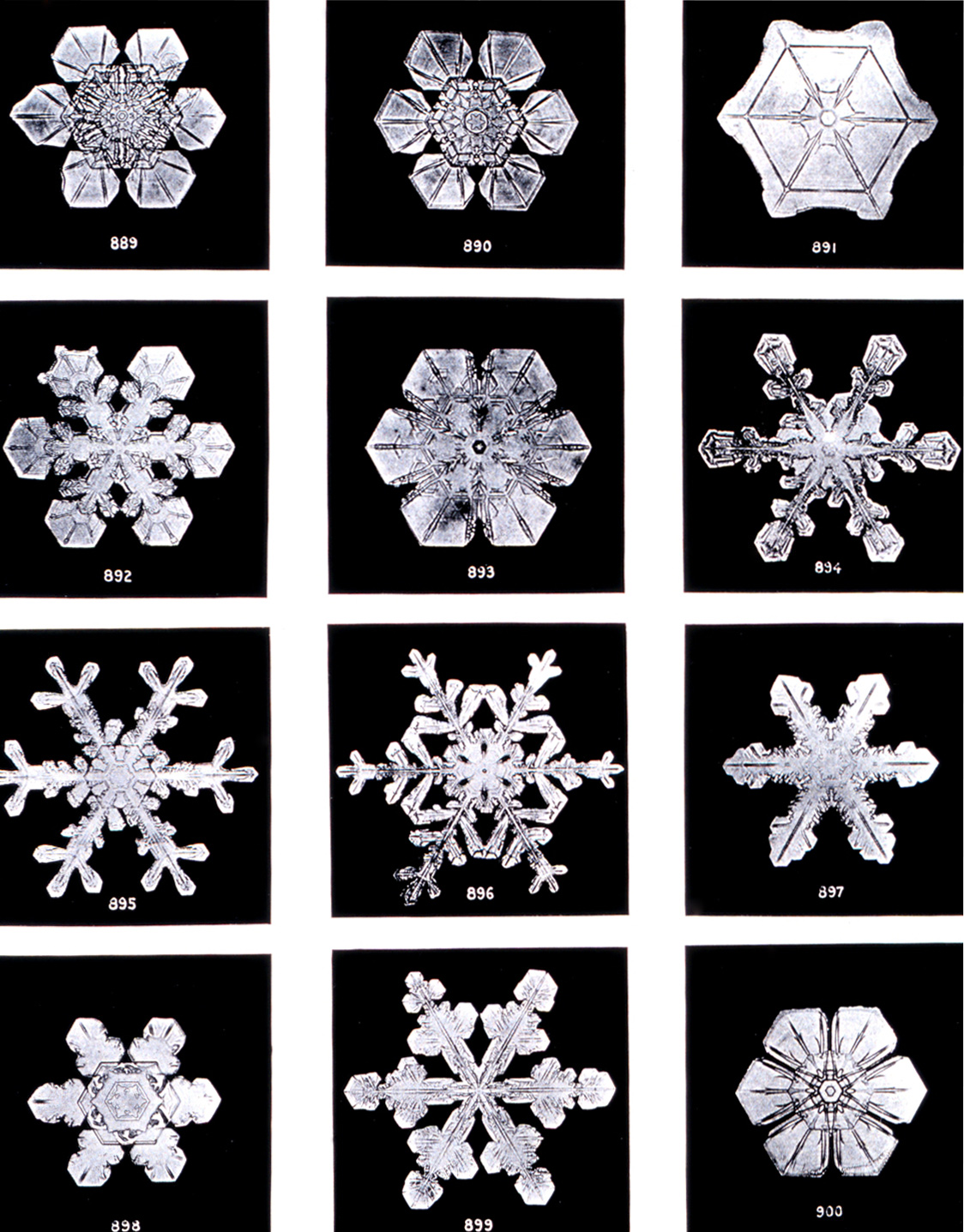
Glossary — self-assembly. Components organize into patterns or structures without a human assembling each piece. Related but broader: self-organization (includes dynamic systems like flocks).
Watch: capillary clumping you can see at breakfast
The Cheerios effect is a real capillary phenomenon used in classroom floatile demos.
Source: Be Smart — The Cheerios Effect (verified public video).
Real engineered demos (not science fiction)
Three landmark visible demos you will meet again:
- DNA origami — a long DNA strand folds into a designed shape with help from many short “staple” strands (Rothemund 2006 ).
- Kilobot swarm — about a thousand simple robots form shapes using local communication (Rubenstein et al. 2014 ).
- Modular robots — cubes/modules that dock and reconfigure (lab prototypes, not store-bought programmable matter).
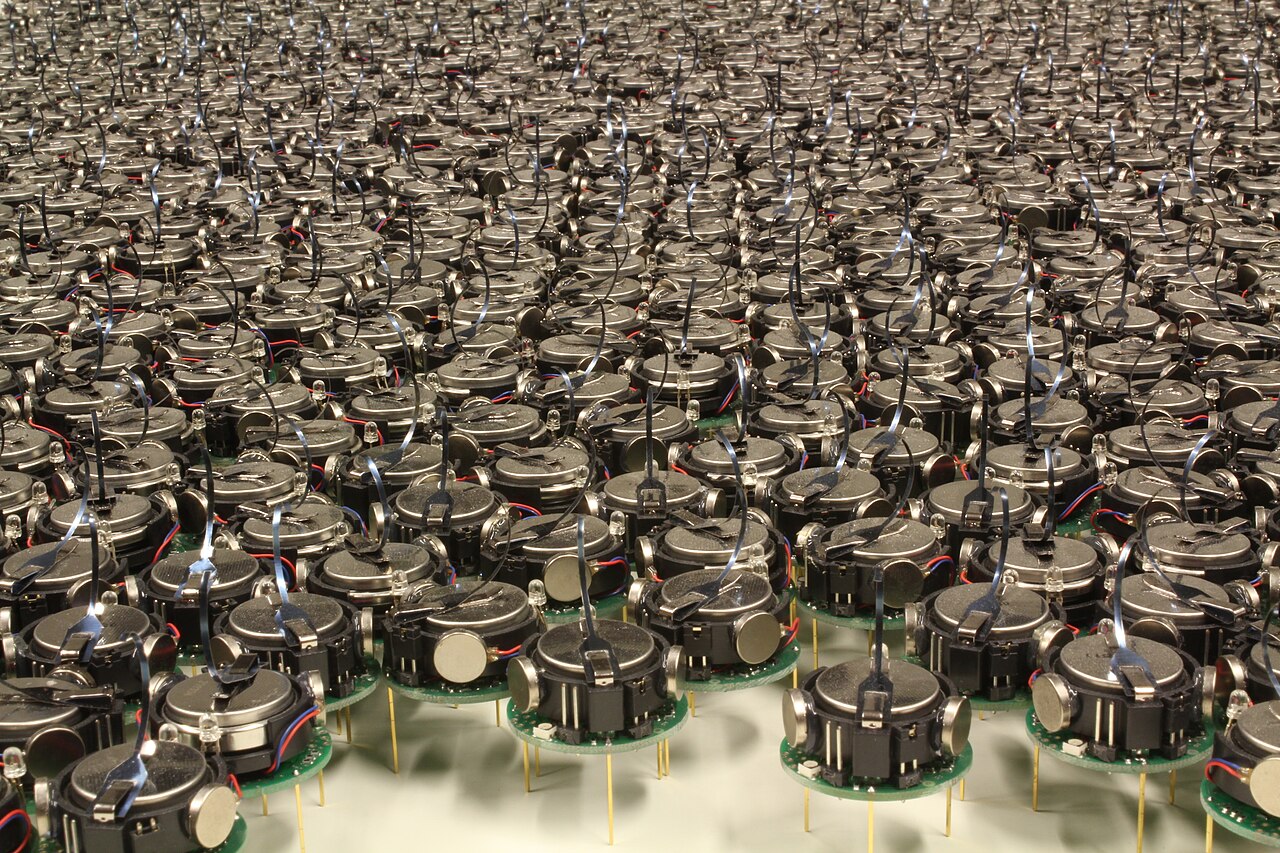
Watch: a thousand robots form a shape
Source: Harvard University — Programmable self-assembly in a thousand-robot swarm .
Try this (5 minutes)
- Pour cereal (or paper circles) onto water in a dish.
- Gently agitate once, then wait.
- Sketch: where do clumps form? Edge? Center?
- Write one sentence: What was the “rule”? What was the “environment”?
Safety: kitchen water only — no chemicals.
What this chapter is not saying
It is not saying you can buy programmable matter off a shelf. It is saying: the idea is visible in nature, breakfast physics, DNA nanotech demos, and robot labs.