Home

Hyperscale Prep

Public study site for operating large-scale compute at hyperscale — the kind of role that asks for 100+ clusters / 10K+ nodes, deep Kubernetes internals, cloud & cluster networking, security, and safe change systems (Terraform/Atlantis, Temporal/Argo).

Maintained as daily operator-deep lessons plus diagrams: written like an engineer who ran this in production — not a certification cram sheet.

Live docs: caretak3r.github.io/hyperscale-prep (opens in a new tab)

Practice problems for LLMs

AI Inference & Hosting Infrastructure Benchmarks (12-page PDF): 21 production-grade prompts, ordered by difficulty from L1 (a single-replica OpenAI-compatible server) to L9 (hierarchical KV cache and encode-prefill-decode on mixed accelerators), with multi-region failover, Kubernetes-native inference (KServe, llm-d, DRA, Kueue) and Slurm hybrids in between. Each prompt has an objective, staged artifacts to produce, and a mechanical grader contract, so you can run them against an LLM (or yourself) and grade the artifacts, not the prose.

📄 Open the practice problems (PDF)

Agent infrastructure track

The next stretch of lessons goes one layer up, into the agent runtime infrastructure from the Agent Infra Landscape 2026 map: memory and context stores, MCP/A2A gateways, sandboxes, browser and computer-use fleets, and agent observability. Same house rules as every other lesson (operator depth, Security & hardening, diagrams, failures & fixes), written from the view of the team that has to run these for thousands of agents on Kubernetes and GPU cells.
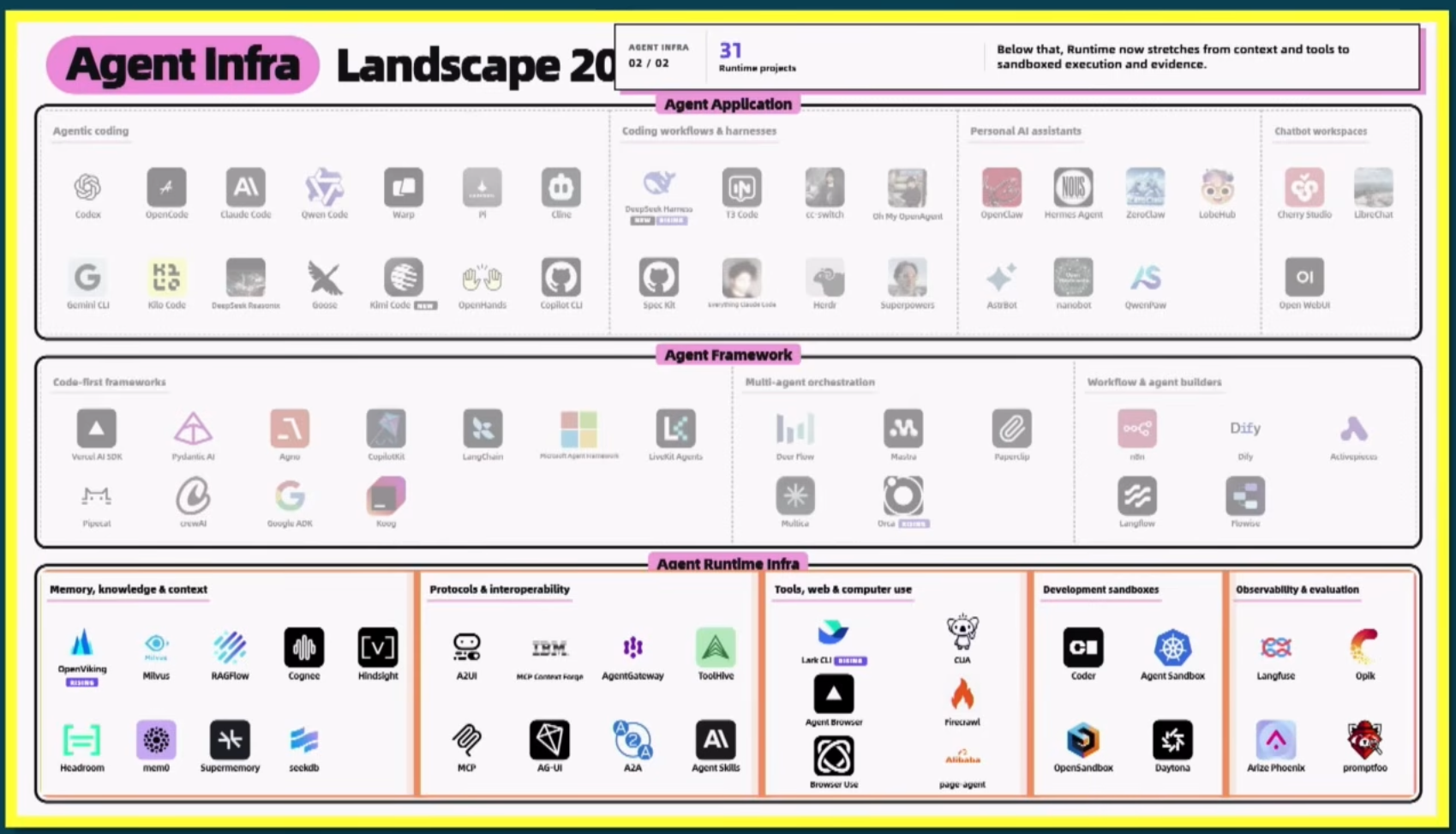
Agent Infra Landscape 2026: Agent Application, Agent Framework and Agent Runtime Infra layers (memory and context, protocols and interoperability, tools and computer use, development sandboxes, observability and evaluation)

Upcoming (Lessons 52–54 are done):

#Lesson
52MCP & A2A at fleet scale: tool and agent gateways (AgentGateway, IBM ContextForge, ToolHive), auth, tool registries and the MCP threat model (done)
53Agent memory & context infrastructure: Milvus, seekdb, mem0, Cognee, Supermemory, Hindsight, OpenViking, RAGFlow, Headroom, tenant isolation and memory poisoning (done)
54Sandboxed agent execution at scale: Kubernetes Agent Sandbox, gVisor/Kata/Firecracker, Daytona, OpenSandbox, Coder, warm pools and cold starts (done)
55Browser & computer-use agent infrastructure: Browser Use, Agent Browser, Firecrawl, CUA, egress, anti-SSRF and prompt injection from the web
56Agent observability & evaluation: OpenTelemetry GenAI conventions, Langfuse, Arize Phoenix, Opik, promptfoo red teaming, cost per task
57Agent UI protocols & durable execution: AG-UI, A2UI, streaming fan-out, human-in-the-loop interrupts, resume after node loss
58Agent identity & delegated authorization: per-agent identity, on-behalf-of token exchange, scoped tool credentials, kill switches
59Hosting coding agents for an org: Claude Code, Codex, OpenHands, Goose, Gemini CLI, Agent Skills distribution and credential scoping
60Multi-agent orchestration & workflow builders as platform services: Dify, n8n, Langflow, Flowise, tenancy and supply-chain risk
61Capstone: designing an agent platform for 10K concurrent agents

What this JD is really asking

Interviewers saying “100+ clusters / 10K+ nodes” are not asking if you can kubectl get nodes on a big managed cluster. They want evidence you have run a fleet under partial failure: many independent control planes, continuous node death, and automation that treats clusters as cattle.

This site builds that mental model lesson by lesson.

How daily lessons work

  1. One lesson per day on a JD-aligned topic.
  2. Each lesson targets production depth:
    • Diagram (PNG + Mermaid)
    • Concrete commands / config
    • Failures & fixes (symptoms → causes → mitigations)
    • Security & hardening (operator controls; AI/ML weights/images/deployments when relevant)
    • Real reference URLs
    • Interview soundbites
    • Self-check prompt
    • Watch — YouTube talks/demos when applicable
  3. Also covers AI/ML platform engineering (GPU fleets / inference serving) using wafer-ai/gpu-perf-engineering-resources (opens in a new tab) as curriculum fuel — operator depth, not CUDA tutorials — including model/weight hardening, private registries, signing/provenance, and secured inference deployments.
  4. Future lessons live as MDX under lessons/ — see Conventions.
  5. The original hyperscale-one-pager.md (opens in a new tab) is kept as an archive; the docs site is the canonical reading path.

Curriculum

#LessonStatus
1Hyperscale mental model: 100+ clusters / 10K+ nodesDone
2Kubernetes control plane internals at scaleDone
3Cluster provisioning & lifecycle systemsDone
4Borg/Mesos-like orchestration patternsDone
5Cloud networking: VPC, peering, Shared VPC, Transit GatewayDone
6Cloud Interconnect / Direct Connect, Cloud NAT, BGP & route controlDone
7Edge load balancing & DDoS (Cloud Armor / AWS Shield)Done
8Cluster networking: CNI, Cilium, eBPF fundamentalsDone
9NetworkPolicy, multi-NIC, sFlowDone
10Service mesh: Istio/Envoy/Linkerd & mTLSDone
11Cluster security: PSS, admission, RBAC, IAM least privilege & auditDone
12Node/container hardening & supply-chain provenance (images, SBOM, signing)Done
13AI/ML security: model weights & checkpoint hardening (registry, signing, bucket IAM, encryption)Done
14AI/ML security: securing inference/training deployments (admission, network policy, secrets, GPU isolation)Done
15IaC: Terraform + Atlantis at fleet scaleDone
16Workflow orchestration: Temporal & Argo WorkflowsDone
17Systems design tradeoffs for rapidly evolving platformsDone
18AI/ML platform: GPU node pools, device plugins, MIG/time-slicing, SKU isolationDone
19AI/ML platform: GPU topology — NVLink/NVSwitch, multi-NIC RDMA, GPUDirect, NCCLDone
20AI/ML platform: training/inference scheduling — gang, Kueue/Volcano, fair-share queuesDone
21AI/ML platform: inference serving SLOs — TTFT/TPOT/goodput, continuous batching, KV cache as capacityDone
22AI/ML platform: prefill/decode disaggregation & MoE serving topology on the fleetDone
23AI/ML platform: GPU observability — DCGM, NCCL tests, roofline capacity planningDone
24AI/ML platform: multi-cluster inference routing & capacity planning across cellsDone
25AI/ML platform: multi-tenant GPU isolation & quota economics across cellsDone
26AI/ML platform: GPU cost attribution, reclaim & spot/preemptible economics on the fleetDone
27AI/ML platform: GPU supply chain — weight registries, checkpoint lifecycle & cold-start hydrate economicsDone
28AI/ML platform: inference autoscaling & scale-to-zero — token-metric HPA/KEDA, warm pools & GPU node provisioning latencyDone
29AI/ML platform: training job reliability at scale — checkpoint/restart, elastic training, straggler & failed-node detectionDone
30AI/ML platform: distributed training storage & data loading at scale — dataset streaming, caching tiers & I/O stallsDone
31AI/ML platform: evaluation & release gating at fleet scale — eval clusters, regression gates & canary rollouts of new weightsDone
32AI/ML platform: offline/online eval consistency & LLM-as-judge at fleet scaleDone
33AI/ML platform: prompt/tool catalog versioning & serving config as code at fleet scaleDone
34AI/ML platform: agent/tool sandboxing, side-effect controls & egress policy at fleet scaleDone
35AI/ML platform: fleet-wide incident response & on-call runbooks for GPU, inference and agent workloadsDone
36AI/ML platform: multi-region DR & failover for inference — traffic shift, cross-region weight hydrate & RTO/RPO for GPU cellsDone
37AI/ML platform: chaos engineering & DR game days for GPU inference fleets — region blackhole drills, hydrate storms & controlled failbackDone
38AI/ML platform: GPU fleet capacity planning & procurement — demand forecasting, reservation mix & lead-time risk for inference and trainingDone
39AI/ML platform: GPU fleet lifecycle — node acceptance, burn-in, firmware/driver rollouts & RMA at 10K+ GPUsDone
40AI/ML platform: InfiniBand / RoCE fabric operations at scale — subnet management, congestion control, link flaps & fabric health for 10K+ GPU clustersDone
41AI/ML platform: power, cooling & facility constraints for GPU fleets — rack power budgets, liquid cooling failures, power capping & thermal throttlingDone
42AI/ML platform: fleet-scale node OS & kernel management — immutable images, kernel/driver ABI coupling & live patching across 10K+ GPU nodesDone
43AI/ML platform: GPU node bootstrap & bare-metal provisioning at scale — PXE/iPXE, Redfish automation, cluster join & zero-touch onboarding of new racksDone
44AI/ML platform: GPU cluster control-plane scaling — API server, etcd and controller load from 10K+ GPU nodes, DaemonSet fan-out & watch stormsDone
45AI/ML platform: fleet-wide Kubernetes upgrades for GPU clusters — version skew, control-plane and node-pool upgrade waves, API deprecations & training-job-safe drainsDone
46AI/ML platform: GPU cluster networking at fleet scale — CNI choices for GPU nodes, multi-NIC (Multus/DRA network), IP address management for 10K+ nodes & east-west isolation for training and inferenceDone
47AI/ML platform: DNS, service discovery & east-west load balancing at fleet scale — CoreDNS and NodeLocal DNSCache at 10K+ nodes, EndpointSlice fan-out, conntrack limits & inference gateway trafficDone
48AI/ML platform: workload identity, secrets & PKI at fleet scale — SPIFFE/SPIRE, cloud workload identity federation, certificate rotation across 10K+ nodes & scoped access to weight bucketsDone
49AI/ML platform: fleet observability pipelines at scale — metrics, logs & traces from 10K+ GPU nodes, Prometheus sharding vs Thanos/Mimir, cardinality budgets for DCGM & inference metrics, and telemetry cost controlDone
50AI/ML platform: SLOs, error budgets & alerting design at fleet scale — multi-window burn-rate alerts for inference endpoints, alert routing across 100+ clusters, paging hygiene and GPU-fleet health signals that actually pageDone
51AI/ML platform: GitOps & progressive delivery across 100+ clusters — Argo CD ApplicationSets and Flux at fleet scale, sync waves and rollout rings, drift detection, SLO-gated promotion and securing the GitOps control planeDone
52Agent runtime infra: MCP & A2A at fleet scale — tool and agent gateways (AgentGateway, IBM ContextForge, ToolHive), OAuth 2.1 auth and token exchange, tool registries, and the MCP threat modelDone
53Agent runtime infra: agent memory & context infrastructure — vector and hybrid stores (Milvus, seekdb), memory layers (mem0, Cognee, Supermemory, Hindsight, OpenViking), RAGFlow ingestion, context compression (Headroom), tenant isolation and memory poisoningDone
54Agent runtime infra: sandboxed agent execution at scale — Kubernetes Agent Sandbox (Sandbox, SandboxTemplate, SandboxClaim, warm pools), gVisor vs Kata vs Firecracker, Daytona/OpenSandbox/E2B-style sandbox APIs, Coder workspaces, snapshot/resume and cold-start economicsDone
—AI/ML platform track (continues: Lessons 18–51 GPU pools + topology + scheduling + inference SLOs + PD disagg/MoE + DCGM/NCCL/roofline + multi-cluster routing/capacity + multi-tenant GPU isolation/quota + GPU cost attribution/reclaim/spot + GPU supply chain/weight registries/hydrate + inference autoscaling/scale-to-zero + training reliability/checkpoint/elastic + training data loading/storage/I/O stalls + evaluation/release gating/canary weights + offline/online eval consistency/LLM-as-judge + prompt/tool catalog versioning/serving config as code + agent/tool sandboxing/side-effect controls/egress policy + fleet-wide incident response/on-call runbooks + multi-region DR/failover for inference + chaos engineering/DR game days + GPU fleet capacity planning/procurement + GPU fleet lifecycle/acceptance/burn-in/rollouts/RMA + InfiniBand/RoCE fabric operations + power, cooling & facility constraints + node OS & kernel management + GPU node bootstrap & bare-metal provisioning + GPU cluster control-plane scaling + fleet-wide Kubernetes upgrades + GPU cluster networking at fleet scale + DNS, service discovery & east-west load balancing + workload identity, secrets & PKI + fleet observability pipelines + SLOs, error budgets & alerting + GitOps & progressive delivery Done; agent runtime infrastructure track: Lesson 52 MCP & A2A at fleet scale, Lesson 53 agent memory & context infrastructure and Lesson 54 sandboxed agent execution at scale done; next is Lesson 55 — browser & computer-use agent infrastructure) — fueled by wafer-ai/gpu-perf-engineering-resources (opens in a new tab)Upcoming

Progress metadata: curriculum.json (opens in a new tab).

How to read

  1. Interview crunch: newest lessons first; use soundbites + Failures & fixes as flashcards.
  2. Deep prep: Lesson 1 → 2 → … in order — later lessons assume cell/fleet vocabulary.
  3. Open linked PNGs / Mermaid while reading; each lesson says how to read the diagram top-down.
  4. Do the Quick self-check out loud before the next lesson.

Start here

→ Lesson 1 — Hyperscale mental model