Chapter 11 — Who Sells the Stack
Part IV of IV — Emerging mechanisms, governance, and synthesis. The firms and products supplying the four-layer bill of materials, their ownership status, and how enterprise cybersecurity differs from weight security.PreviousThis paragraph was added in this version.NowPart IV of IV — Emerging mechanisms, governance, and synthesis. The firms and products supplying the four-layer bill of materials, their ownership status, and how enterprise cybersecurity differs from weight security.
Chapter 1 asked who gets paid to pour the concrete; Chapters 5 through 8 priced the line items; Chapter 10 asked whether policy forces the purchase. Here is the supplier map.PreviousThis paragraph was added in this version.NowChapter 1 asked who gets paid to pour the concrete; Chapters 5 through 8 priced the line items; Chapter 10 asked whether policy forces the purchase. Here is the supplier map.
It is not a buy list. Ticker Honesty found zero separately attributable weight-security revenue across its four-specialty-name review. Mega-caps and platform-cyber firms appear because procurement officers buy from them, yet their products cover different security boundaries, and shipping hardware does not guarantee its marketing claims hold.PreviousThis paragraph was added in this version.NowIt is not a buy list. Ticker Honesty found zero separately attributable weight-security revenue across its four-specialty-name review. Mega-caps and platform-cyber firms appear because procurement officers buy from them, yet their …
The category error that wastes the budget
Enterprise cybersecurity and weight security protect different objects, even when both sit on the same vendor’s invoice.PreviousThis paragraph was added in this version.NowEnterprise cybersecurity and weight security protect different objects, even when both sit on the same vendor's invoice.
The public cybersecurity market is liquid and mature, built around endpoints, firewalls, cloud posture, and privileged access [1], [2], [3], [4]. Table 11-1 lists the SEC-filed product lines alongside what they actually do for model weights. Notably, Palo Alto Networks’ FY2026 Form 10-K contains zero occurrences of the strings “confidential comput,” “model weight,” “TEMPEST,” “data diode,” “HSM,” or “SCIF” [2]. Those platforms cover baseline hygiene on a training island, leaving weight custody unaddressed.
Palantir requires the same boundary. Its FY2025 Form 10-K registers Class A stock (PLTR) and names four software platforms: Gotham, Foundry, Apollo, and AIP [5]. That filing describes enterprise software platforms, not containment hardware. Karp’s commercial-sovereignty argument (Chapter 1) does not make Palantir a weight-security OEM, matching Ticker Honesty.
| Firm | Listing | Product the filing names | What it is for weights |
|---|---|---|---|
| CrowdStrike | Nasdaq CRWD | Falcon platform: endpoint, cloud, identity sensor (“purpose-built to stop breaches” via a “single, lightweight sensor” across “endpoints, cloud workloads, identities, and third-party sources”) [1] | Enterprise floor. Detects lateral movement. Does not bind a checkpoint to a chip. |
| Palo Alto Networks | Nasdaq PANW | Strata Cloud Manager, Prisma Cloud, Cortex, Prisma AIRS (AI Gateway, Agent Security, Model Security, Red Teaming, Runtime, Posture Management); enhanced by Protect AI (closed 22 Jul. 2025, $635M vs. $700.0M signing) and Portkey (closed 29 May 2026, $117M) [2], [6] | Network, cloud, SOC, and AI-security software. Floor. Prisma AIRS discovers and assesses AI agents/apps/models; does not unwrap weights only onto attested silicon. |
| Fortinet | Nasdaq FTNT | FortiGate hybrid-mesh firewall [3] | Perimeter and segmentation. Not a diode. |
| Palo Alto Networks (Idira platform, ex-CyberArk) | Nasdaq PANW | Idira (closed 11 Feb. 2026, $21.1B): Privileged Access Management, Endpoint Privilege Manager, Identity Governance, Secrets Management, Vendor Privileged Access; pre-close CyberArk Form 20-F named Privileged Access Manager and Endpoint Privilege Manager [2], [4], [7] | Governs who can mount a weight store. Necessary, yet insufficient without hardware binding. |
| Palantir | Nasdaq PLTR | Gotham, Foundry, Apollo, AIP [5] | Adjacent software platforms. No RoT, CC, diode, or TEMPEST product line in the filing. |
| Microsoft | Nasdaq MSFT | Common stock plus listed notes [8] | Host (Azure confidential SKUs, Chapter 6) and floor (Defender-class endpoint). Two roles, one ticker. |
The public cybersecurity product market, plus Palantir, as their own 2025-2026 SEC filings describe them.
Listing status is the Section 12(b) table.
Product names are the filings’ own.
The right-hand column is this chapter’s reading of those product lines against the artifact bundle, not a claim the filings make about model weights.
The 2025–2026 wave of AI-security software M&A repeats this category error at higher resolution. Prisma AIRS [2] and Check Point + Lakera (closed 22 October 2025, total consideration approximately $201.8 million [9]) operate on the prompt and response path, leaving checkpoint files untouched. HiddenLayer (private; $100 million Series B announced 2 September 2026 [10]) and Prisma AIRS model scanning [2] check serialization integrity against pickle exploits or malicious scripts, leaving confidentiality unsolved because a clean checkpoint can still be copied.
The operational gap remains attestation-gated unwrap of the weight data-encryption key (Chapter 6): wiring key release so a PAM session or research laptop can never serve as the unwrap site, enforced with two-person approval. Standard vaults unwrap keys into host RAM, where software cannot stop bulk copy. Only Azure Secure Key Release, AWS KMS RecipientAttestation, GCP Confidential Space CEL, and Fortanix CCM+DSM couple unwrap to hardware attestation.PreviousThis paragraph was added in this version.NowThe operational gap remains attestation-gated unwrap of the weight data-encryption key (Chapter 6): wiring key release so a PAM session or research laptop can never serve as the unwrap site, enforced with two-person approval. Standard …
Four concurrent roles
Procurement breaks down when a buyer treats a host SKU as a protect control, or an audit PDF as custody. Four concurrent roles sit around every weight file.PreviousThis paragraph was added in this version.NowProcurement breaks down when a buyer treats a host SKU as a protect control, or an audit PDF as custody. Four concurrent roles sit around every weight file.
Four roles, one file.
Hold is the lab that trains or serves.
Host is the operator of the building and the cluster.
Protect is a named control — a diode, an RoT block, an HSM, a TEE SKU.
Assure is an audit, a certificate, or a threat model.
Assurance produces evidence.
It does not take custody.
Chapter 6’s confidential-computing gap is the worked example: a host SKU marketed as a protect guarantee against an active cloud operator, which no TEE in this book meets.
Hold. Frontier asset owners (OpenAI, Anthropic, Google, Meta, xAI) retain bundle custody and are not evaluated here as security-product vendors.PreviousThis paragraph was added in this version.NowHold. Frontier asset owners (OpenAI, Anthropic, Google, Meta, xAI) retain bundle custody and are not evaluated here as security-product vendors.
Host. Cloud and colocation landlords (Microsoft MSFT [8], Amazon AMZN [11], Alphabet GOOGL [12], plus silicon suppliers NVIDIA NVDA [13], AMD AMD [14], Intel INTC [15]) operate the infrastructure. Their SEC Section 12(b) listings establish public status without isolating weight-security revenue, and their confidential-computing SKUs leave Chapter 6’s active-adversary gap open.
Protect. Control vendors covered below supply specific boundary hardware or software.PreviousThis paragraph was added in this version.NowProtect. Control vendors covered below supply specific boundary hardware or software.
Assure. Frameworks, labs, and agencies (RAND, CMVP, Trail of Bits, national bodies) grade claims rather than taking custody; Chapter 12 scores those assessments.PreviousThis paragraph was added in this version.NowAssure. Frameworks, labs, and agencies (RAND, CMVP, Trail of Bits, national bodies) grade claims rather than taking custody; Chapter 12 scores those assessments.
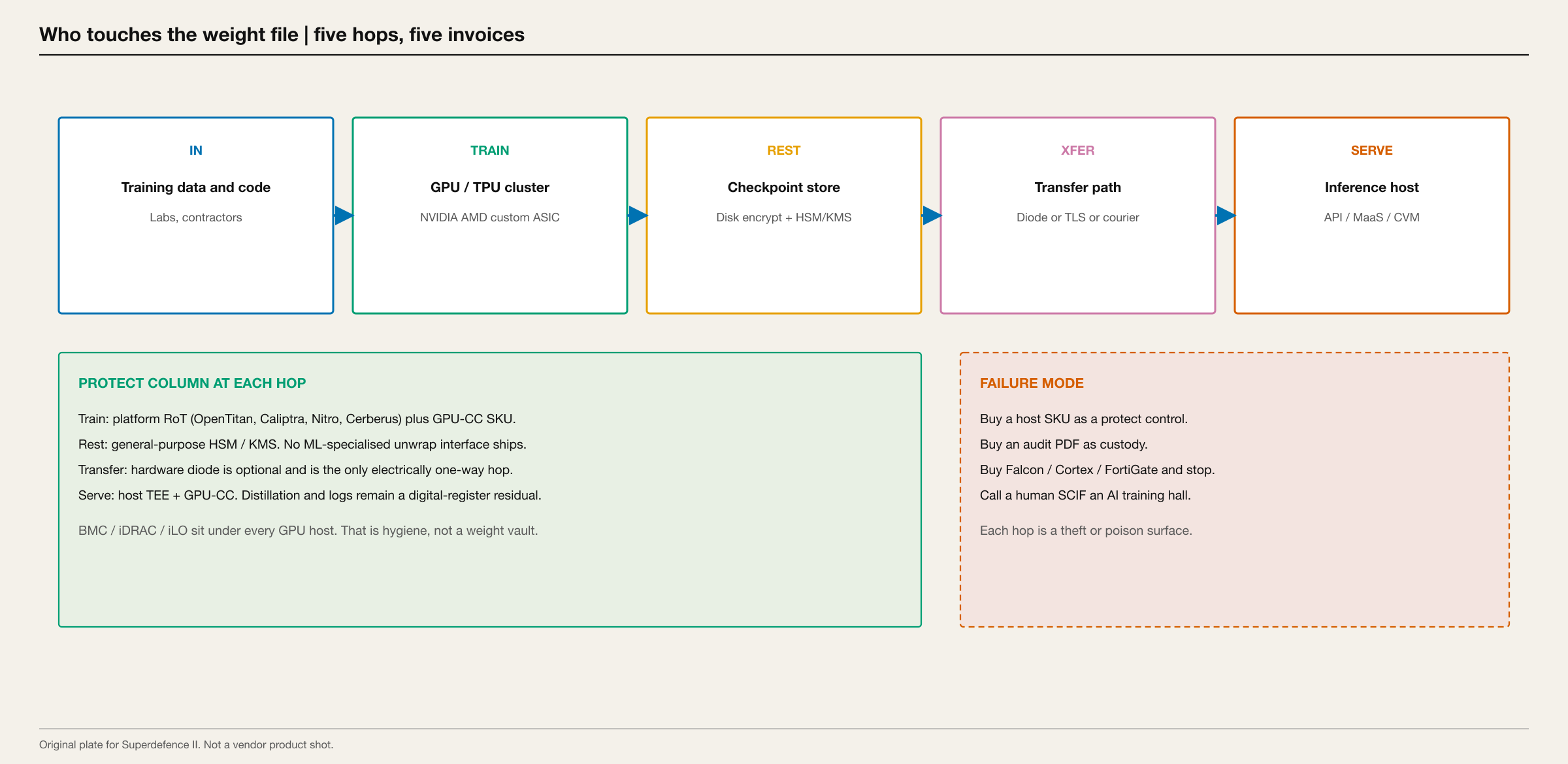
Claim. The weight file has five hops, and each hop is a separate invoice.
Protect column. RoT and GPU-CC at train; general-purpose HSM at rest; optional diode at transfer; host TEE plus GPU-CC at serve.
Failure mode. Buying a host SKU as a protect control, or stopping at Falcon / Cortex / FortiGate.
Exclusion. No hop on this plate is FlexHEG, an ML-HSM, or an accredited AI-SCIF.
What the protect column actually sells
Products map unevenly across Chapter 1’s four procurement layers: digital, supply-chain, capability, and human-and-organizational. Listed platform-cyber firms saturate the upper enterprise floor, while scarce containment hardware sits lower down.PreviousThis paragraph was added in this version.NowProducts map unevenly across Chapter 1's four procurement layers: digital, supply-chain, capability, and human-and-organizational. Listed platform-cyber firms saturate the upper enterprise floor, while scarce containment hardware sits …
The floor and the bill of materials.
Endpoint detection, firewalls, and privileged-access tools are buyable today from listed firms.
Root-of-trust silicon, confidential-computing SKUs, diodes, shields, and cleared operations are also buyable, at uneven maturity, from a mix of listed conglomerates and private specialists.
The dashed box is the missing product set Chapter 12 files as concept-only or contested: an ML-specialised HSM, an accredited AI-SCIF, and datacenter-scale weight-to-chip binding.
Conflict C2 stays contested.
FlexHEG stays a proposal, not a vendor SKU.
Digital layer — isolation in use
Chapter 6 grades these isolation technologies; Table 11-2 summarizes the listed sellers and filing limits.PreviousThis paragraph was added in this version.NowChapter 6 grades these isolation technologies; Table 11-2 summarizes the listed sellers and filing limits.
| Firm | Listing | Product class already graded | What the listing filing omits |
|---|---|---|---|
| NVIDIA | Nasdaq NVDA [13] | GPU confidential computing on Hopper/Blackwell (Ch. 6); agreed to acquire Hugging Face [16] | Any GPU-CC revenue line |
| AMD | Nasdaq AMD [14] | SEV-SNP host TEE (Ch. 6); Caliptra backer (Ch. 5) | Any confidential-computing revenue |
| Intel | Nasdaq INTC [15] | TDX host TEE (Ch. 6) | Any claim that TDX resists an active operator |
| Microsoft | Nasdaq MSFT [8] | Azure confidential VMs and GPU SKUs (Ch. 6) | Any resolution of conflict C1 |
| Amazon | Nasdaq AMZN [11] | Nitro and enclave SKUs (Ch. 6) | A GPU-CC equivalent by renaming |
| Alphabet | Nasdaq GOOGL / GOOG [12] | Confidential VMs and Private AI paths (Ch. 6) | A kept active-adversary guarantee |
Host and accelerator vendors, listed, selling the digital isolation SKUs Chapter 6 already graded.
The 10-Ks above are cited for the Section 12(b) listing table only.
Maturity, including the unmet active-cloud-operator guarantee, stays in Chapter 6 and in the conflict ledger as C1.
On 2 September 2026, NVIDIA signed a definitive agreement to acquire Hugging Face for “an approximately $11.9 billion purchase price” plus up to “$1.0 billion” in retention, expected to close in H1 2027 [16]. The deal shifts ownership of an open-weight distribution Hub (where 2FA remains optional, Chapter 4) without turning it into a weight vault. Commercial attestation planes named in Chapter 6 (Intel Trust Authority, Fortanix, Anjuna, Microsoft Azure Attestation, Edgeless Systems) prove tooling exists, though they provide integration inputs rather than fleet-wide guarantees.
Supply-chain layer — who the chip says it is
Chapter 5 distinguishes OpenTitan (a complete RoT design), Caliptra (integratable open RTL), and Rambus CryptoManager RT-6xx (licensable IP). Rambus trades on Nasdaq (RMBS), yet its FY2025 10-K prints zero occurrences of “Root of Trust” or “CryptoManager” and reports no RoT revenue line [17]. Evidence for RT-660 rests on CMVP Certificate #4758 (Chapter 5), not the income statement. Underlying BMC stacks (Dell iDRAC, HPE iLO, Supermicro) form baseline hygiene rather than weight-security SKUs (Chapter 4).
Capability layer — keys, and the missing ML interface
Shipping HSMs remain general-purpose cryptographic appliances, exemplified by Chapter 5’s nCipher nShield F3. Specialists include German vendor Utimaco (sold by EQT to SGT Capital in June 2022 [18]) and French conglomerate Thales (foreign-domiciled per Chapter 10 [19]). None ships an ML-specialised interface that unwraps weights exclusively onto attested accelerators and rate-limits inference, leaving G1, matrix C4, and conflict C2 unfulfilled.
Human and organizational layer — who vets the people
People often remain the shortest path to weights. Chapter 8 examines License Exception AIA paragraph 18 and CISA’s insider-threat guidance, while no commercial vetting product dominates the category. Federal primes Peraton and ManTech appear in Chapter 10 for ownership context without establishing weight-security scope [19], [20], [21], and commercial PAM platforms such as Idira [2] or Varonis-class monitoring serve as enterprise analogs rather than clearance pipelines.
Physical controls — composition across the four budget lines
Physical is an attack register rather than a fifth procurement layer, splitting invoices across digital, supply-chain, capability, and human budgets. Airgap diodes are commercially mature, whereas GPU-hall accreditation lacks any published standard.PreviousThis paragraph was added in this version.NowPhysical is an attack register rather than a fifth procurement layer, splitting invoices across digital, supply-chain, capability, and human budgets. Airgap diodes are commercially mature, whereas GPU-hall accreditation lacks any …
| Firm | Listing | Product | Honesty note |
|---|---|---|---|
| Waterfall Security | Private (Israel) [19] | Unidirectional Gateway; vendor claims >1,000 sites since 2007 | Vendor self-report for site count; guarantees wire direction, not people (Ch. 8). |
| Owl Cyber Defense | Private, DC Capital Partners since 2017 [22] | Data diodes and accredited cross-domain products [23] | Private US specialist; no public ticker. |
| Everfox | Private, TPG carve-out, $2.45B, Oct. 2023 [24] | Former Forcepoint federal cross-domain business | Private; category adjacency without public financials. |
| Advenica | Nasdaq Stockholm ADVE.ST [25] | Hardware data diode and cross-domain | Sole listed diode pure-play; FY2025 revenue 203.3 MSEK, 64% from services [25]. |
| ESCO Technologies | NYSE ESE [26] | ETS-Lindgren and MPE: RF/magnetically shielded rooms, secure communication facilities, EMC/EMP/Tempest filters; Test segment $237,201K of $1,095,388K (~21%) [26] | Listed US parent of shield-and-filter OEM; 10-K prints SCIF zero times and isolates no TEMPEST revenue [26]. |
| Vertiv | NYSE VRT [27] | Datacenter power and thermal | FY2025 10-K contains no occurrence of TEMPEST [27]; general datacenter infra. |
Sellers for controls in the physical attack register, with listing status from Chapter 10’s ownership chain and from the specialty 10-Ks Ticker Honesty already opened.
The diode market ships.
The accredited AI-SCIF does not, because NIST SP 800-239 defers site perimeter, buildings, power and cooling, supply chain, and personnel to a correlative initiative that has not been published [28].
What the objects look like
Figures 11-4 through 11-8 show the physical objects that ship today: an integratable RoT block, a general-purpose HSM, human-scale mobile SCIFs, and defense couriers. None represents an AI-SCIF or an ML-HSM.PreviousThis paragraph was added in this version.NowFigures 11-4 through 11-8 show the physical objects that ship today: an integratable RoT block, a general-purpose HSM, human-scale mobile SCIFs, and defense couriers. None represents an AI-SCIF or an ML-HSM.
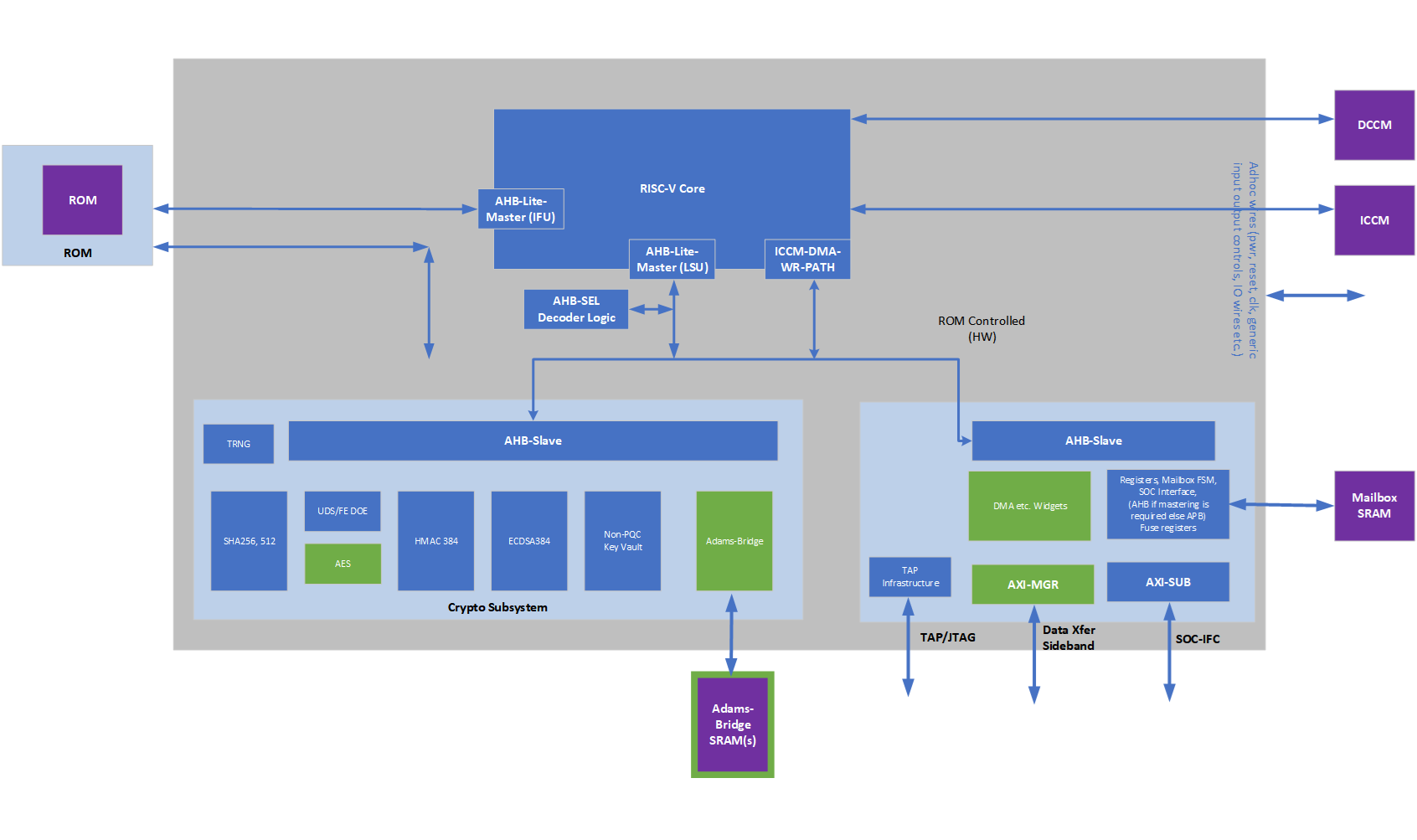
Observed. Caliptra 2.0 as the project’s own documentation draws it: ROM, a RISC-V core, cryptographic blocks, a key vault, mailbox SRAM, and SoC interfaces.
It is an integratable root-of-trust block, not a part number on an accelerator.
Chapter 5 covers the product.
Copied without modification from the Caliptra repository, Apache 2.0 [29].
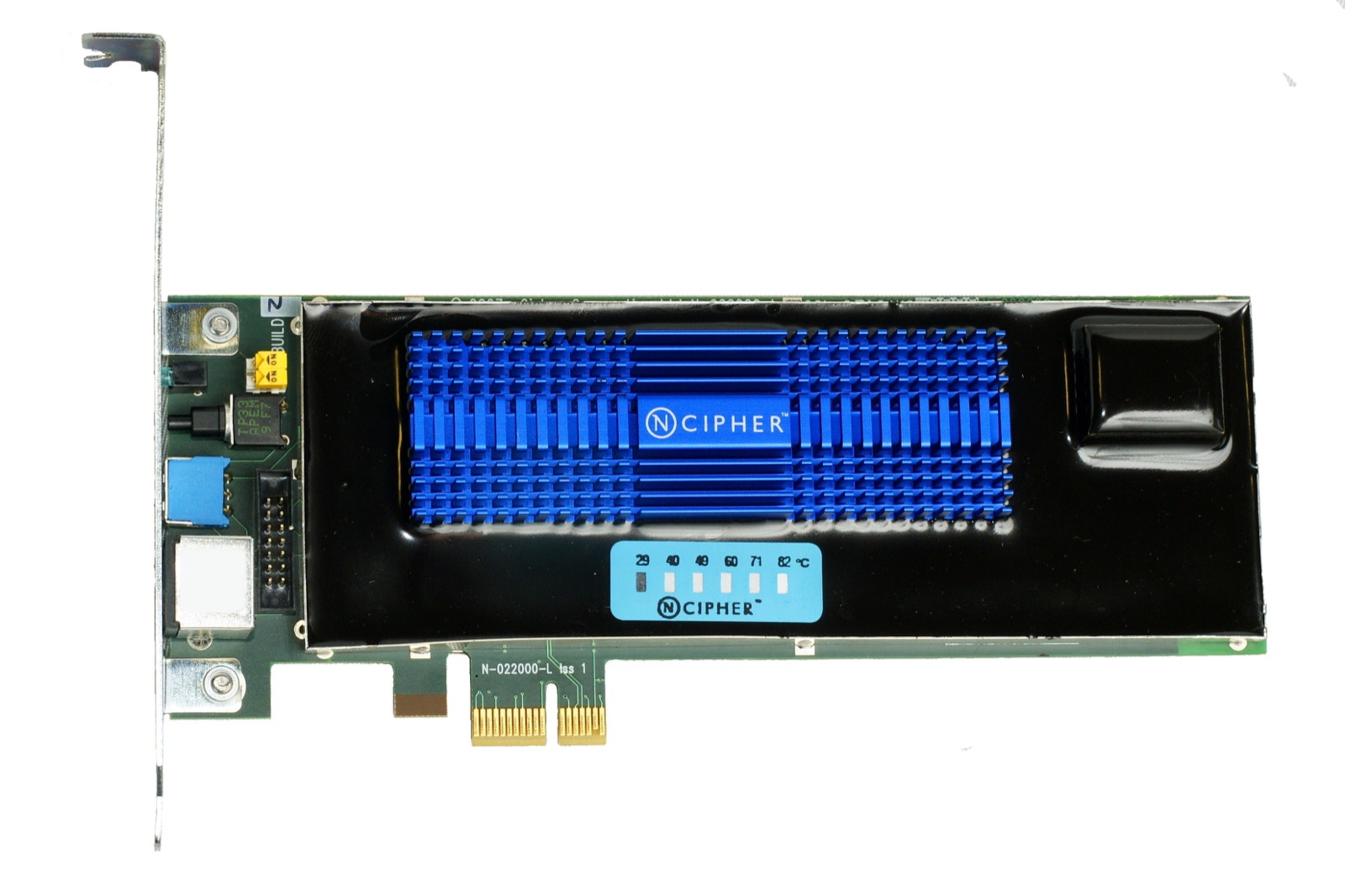
Observed. The capability-layer object that does ship: a general-purpose hardware security module, here an nCipher nShield F3 photographed in 2008.
The cryptographic boundary is the potted block.
The card predates the accelerator fleet this book is about, holds no model weights, and is not an ML-specialised interface.
It is the form factor a lab can buy today while the composed weight-binding product remains missing.
Photograph by Alexander Klink, CC BY 3.0 [30].
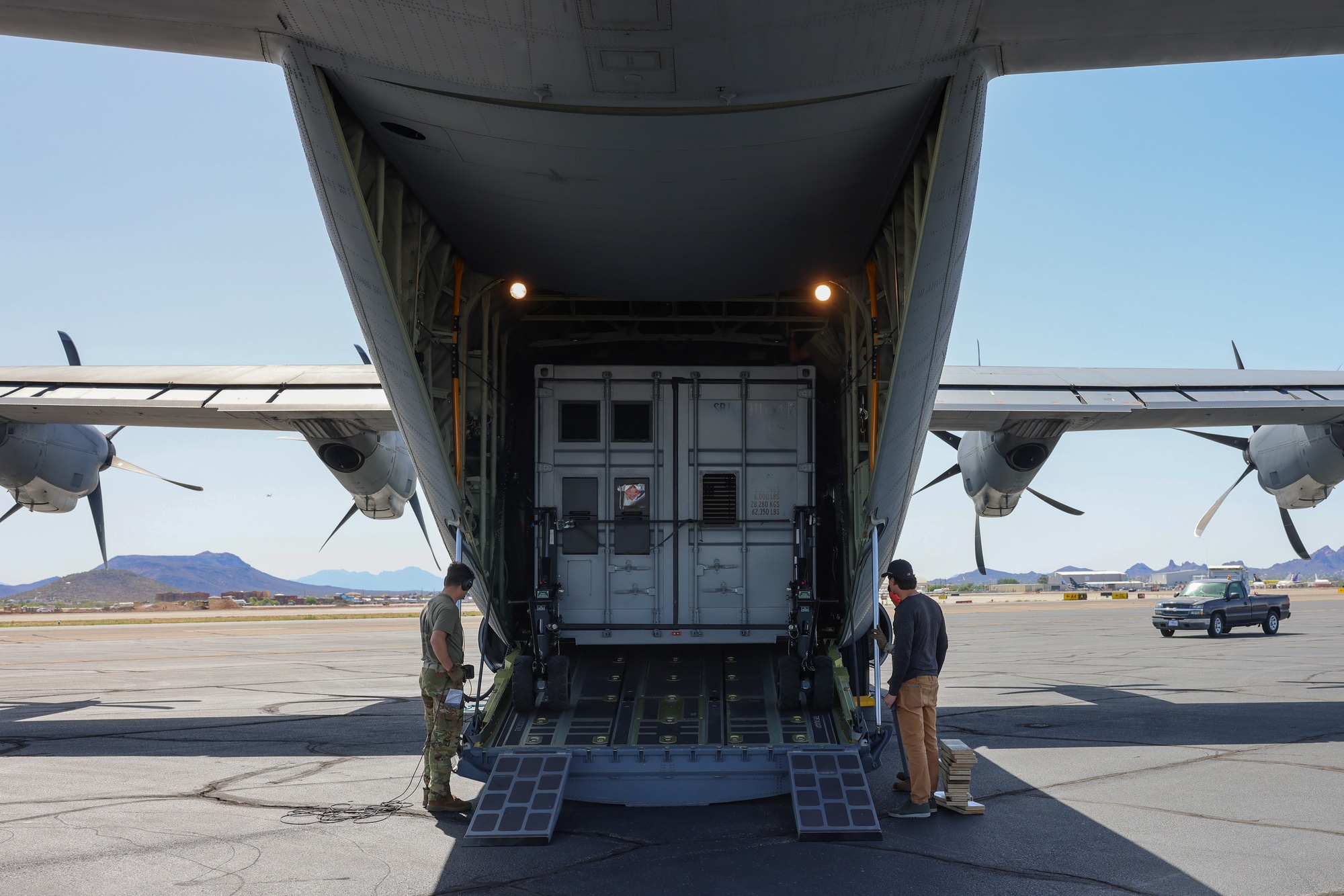
Observed. A mobile modular SCIF being loaded into a C-130.
This is the human-scale accredited space Chapter 8 already used.
It makes the transport and integration burden visible.
It does not show interior controls, TEMPEST filters, liquid-cooled GPU racks, or an accredited AI training hall.
Public-domain DVIDS photograph [31].
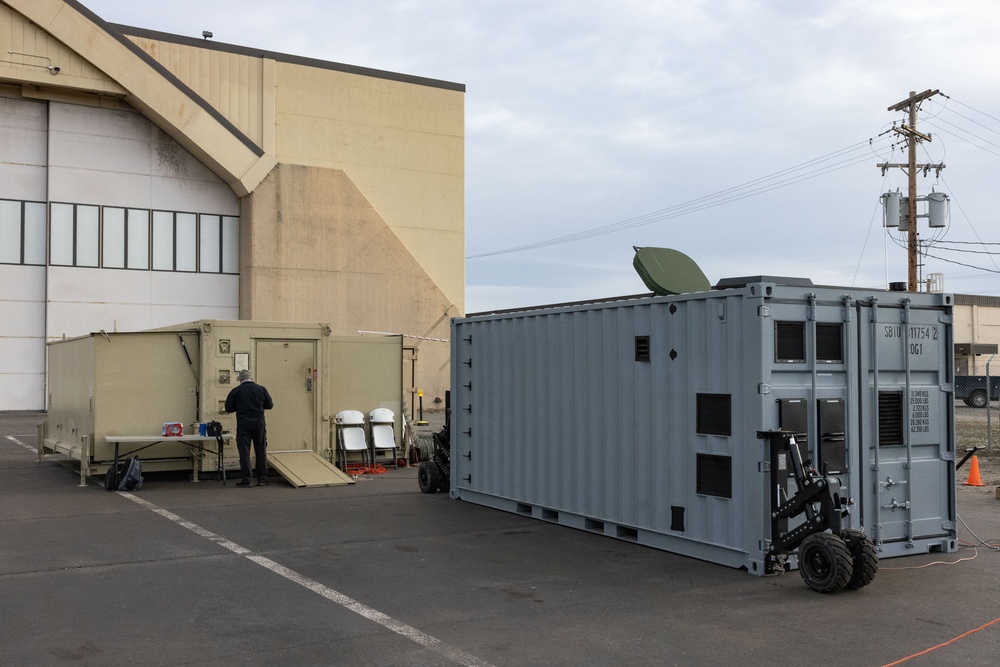
Observed. A second modular mobile SCIF unit, this one at Eielson Air Force Base, Alaska, tested and evaluated for suitability in austere-location missions during Exercise Northern Edge 2023.
Where the C-130 photograph above shows the transport step, this one shows the field-evaluation step of the same procurement class: a deployable containment unit being assessed for mission fit rather than staged for airlift.
It does not show interior RF-shielding performance, accreditation status, or an operational deployment beyond the exercise.
U.S. Air Force photograph, 162nd Wing, DVIDS image 7828343 , public domain [32].
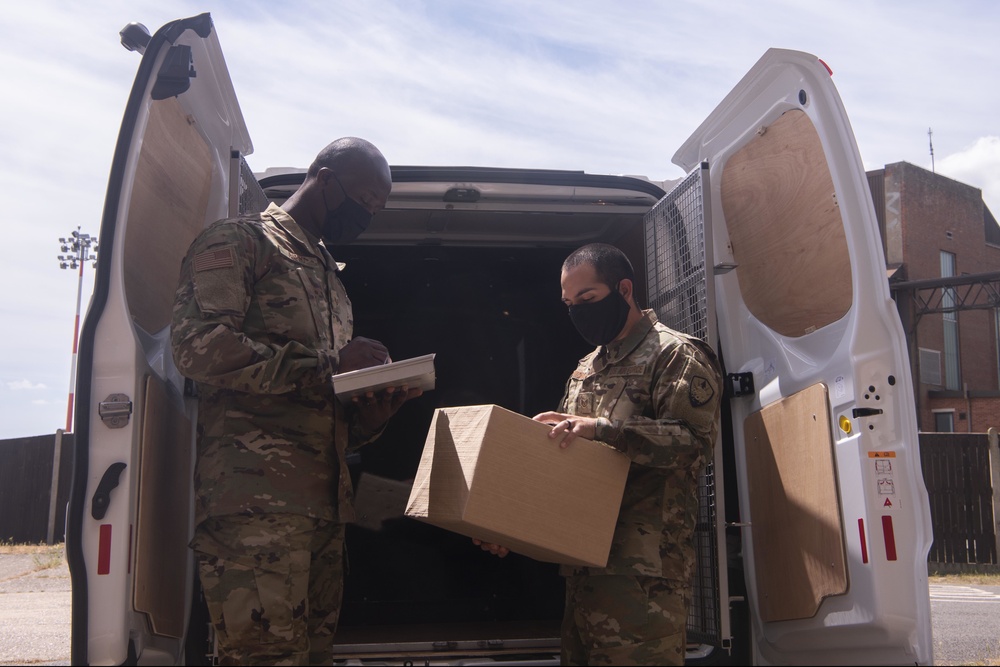
Observed. Defense couriers load packages into a transport vehicle at Defense Courier Station Mildenhall, RAF Mildenhall, England, with clipboard-based verification at the vehicle’s rear doors.
This is the procurement chain’s human-and-organizational layer made visible: the courier link that moves an artifact bundle between the facilities pictured above, on physical media rather than over a data-diode wire.
It shows personnel executing a documented loading procedure; it does not show the interior of the transport chain, tamper-evident seals, or in-transit security measures.
U.S. Air Force photograph by Airman 1st Class Joseph Barron, DVIDS image 6236508 , public domain [33].
Public, private, private-equity, foreign
Chapter 10’s ownership scan pairs with this product map: any containment mandate would rely on the ownership structure shown in Figure 11-9.PreviousThis paragraph was added in this version.NowChapter 10's ownership scan pairs with this product map: any containment mandate would rely on the ownership structure shown in Figure 11-9.
Ownership, not a portfolio.
Several diode and HSM suppliers are private [18], [22], [23], [24].
Advenica is listed in Stockholm and is still majority services [25].
ESCO discloses the shield-and-filter class inside a 21% Test segment and does not isolate an AI-SCIF [26].
Vertiv is general datacenter power [27].
NVIDIA, Microsoft, Amazon, and Alphabet are where the clusters run.
The bounded four-ticker audit in Ticker Honesty found no reviewed filing that isolates weight-security or accredited-AI-SCIF revenue.
That ownership pattern reflects market structure rather than observed demand. A future RFP could buy diodes from Owl, Everfox, Waterfall, or Advenica; HSMs from Utimaco or Thales; shields from ETS-Lindgren; and isolation SKUs from NVIDIA, AMD, Intel, or hyperscalers (while Peraton and ManTech remain unestablished for weight security). Few invoices would clear through a US-listed pure-play, while listed cyber platforms (CRWD, PANW, FTNT, PLTR) would sit on a separate enterprise-floor invoice.PreviousThis paragraph was added in this version.NowThat ownership pattern reflects market structure rather than observed demand. A future RFP could buy diodes from Owl, Everfox, Waterfall, or Advenica; HSMs from Utimaco or Thales; shields from ETS-Lindgren; and isolation SKUs from NVIDIA, …
What you cannot buy
Six controls from the maturity matrix lack an established commercial supplier across the tables above.PreviousThis paragraph was added in this version.NowSix controls from the maturity matrix lack an established commercial supplier across the tables above.
| Missing product | Why a buyer asks | Status |
|---|---|---|
| ML-specialised HSM | Unwrap weights only onto an attested accelerator, with an ML interface and export rate limit | No commercial supplier; conflict C2 contested. |
| Datacenter-scale weight-to-chip binding | Unified missing product seen across RoT, FlexHEG, and RAND | Concept / contested; column stays open. |
| TEE resisting an active cloud-provider adversary | Core guarantee against host operator | Needs maturity; no CSP in Chapter 6 meets it. |
| Multi-node GPU confidential computing | Distributed training and serving inside a TEE | Node-scale ships on named NVIDIA SKUs; rack and multi-node remain missing. |
| Accredited AI-SCIF standard and facility | ICD-705 extended to multi-MW liquid-cooled GPU halls | No published standard; NIST SP 800-239 defers it [28]. |
| FlexHEG networked receipts | Hardware-enabled governance at fleet scale | Proposed; dashed (Chapter 9). |
Buy-side holes, not a vendor-shame list.
Every row is a control this book’s technical chapters already described as missing, immature, or conceptual.
This chapter’s contribution is only to say that no firm in the tables above fills them, including the famous public cybersecurity firms.
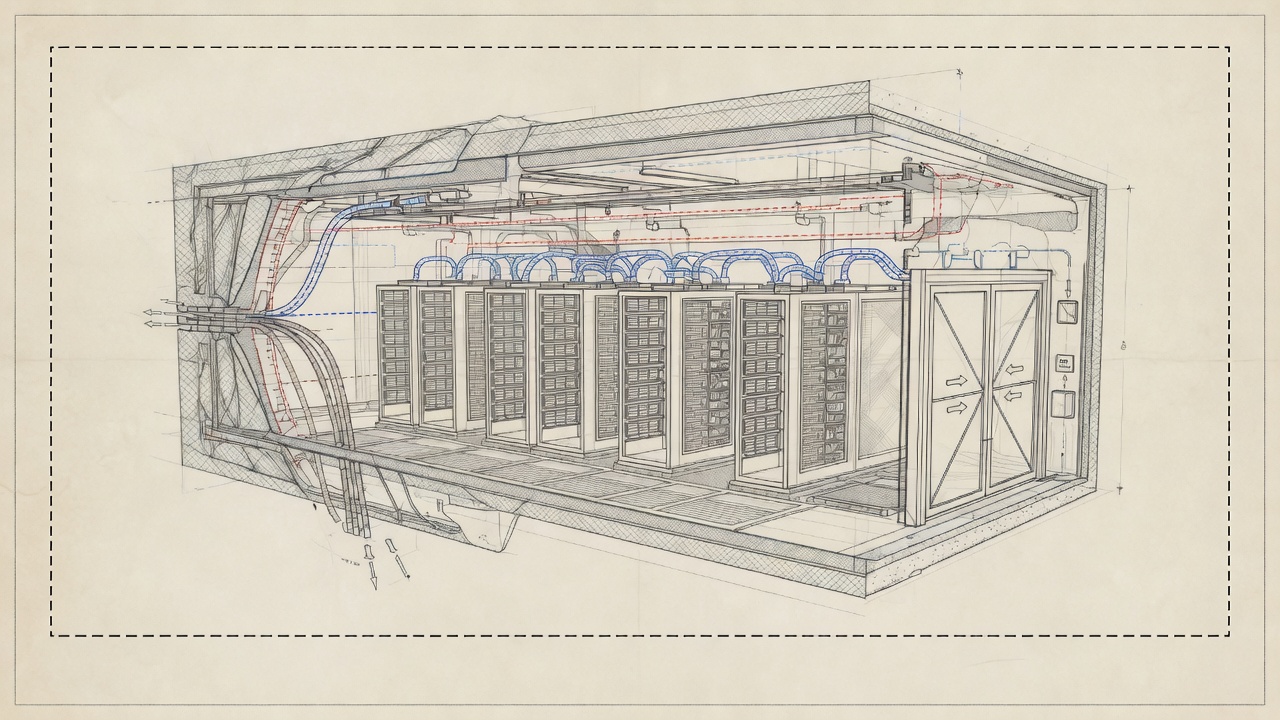
Concept only. No accredited AI-SCIF for a multi-MW liquid-cooled GPU hall exists; NIST SP 800-239 defers that work to a correlative initiative [28].
Not a photograph. This is an illustration of a product class that does not ship.
The human-scale SCIF photograph later in this chapter is the real object.
Do not read this drawing as a built facility or a vendor SKU.
What an SL3 purchase order actually contains
RAND SL3 maps to component classes buyable today against cybercrime syndicates and insiders, even though no independently assessed deployment composes every cumulative SL1-to-SL3 control. Labs do not need to wait for FlexHEG to issue Table 11-5’s illustrative purchase order.PreviousThis paragraph was added in this version.NowRAND SL3 maps to component classes buyable today against cybercrime syndicates and insiders, even though no independently assessed deployment composes every cumulative SL1-to-SL3 control. Labs do not need to wait for FlexHEG to issue …
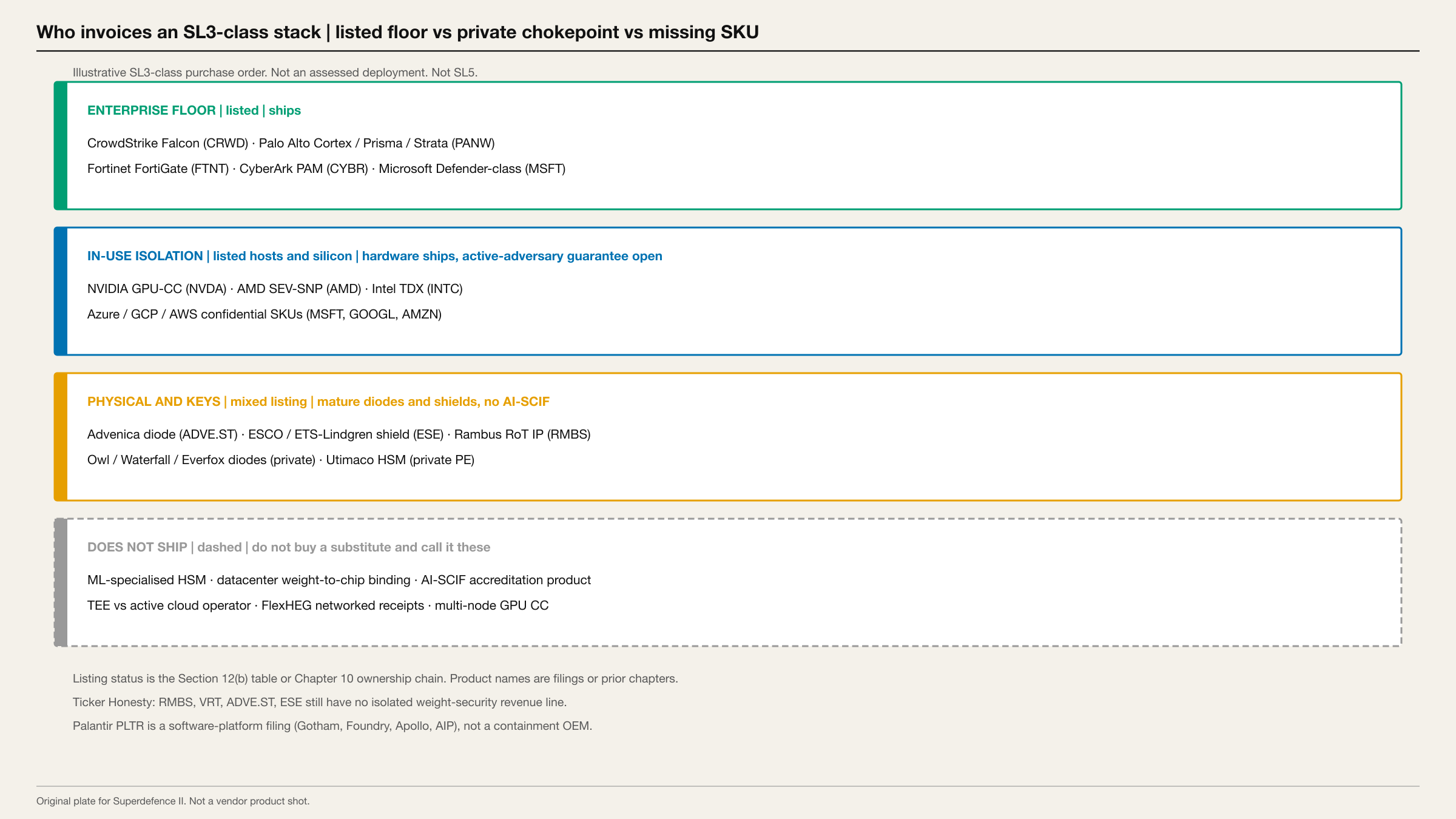
Claim. An SL3-class stack is invoiced across listed floor firms, listed hosts and silicon, and a mixed physical/key supply base.
Honesty. RMBS, VRT, ADVE.ST, and ESE still have no isolated weight-security revenue line.
Dashed band. ML-HSM, datacenter weight-to-chip binding, AI-SCIF, active-adversary TEE, FlexHEG receipts, multi-node GPU CC.
Exclusion. This is not an assessed deployment and not a buy list.
Palantir is a software-platform filing, not a containment OEM.
| Line item | Example seller | Listing | Graded in |
|---|---|---|---|
| Endpoint detection on jump hosts | CrowdStrike Falcon-class [1] | Public | This chapter (floor) |
| Privileged access to weight stores | Idira PAM-class [2], [7] | Public | This chapter (identity) |
| Host TEE for in-use isolation | Azure / GCP / AWS confidential SKUs on AMD SEV-SNP or Intel TDX [8], [12], [14], [15] | Public hosts | Chapter 6 |
| GPU confidential-computing SKU where offered | NVIDIA named SKUs [13] | Public | Chapter 6 |
| Hardware diode on research-net egress | Owl, Waterfall, or Advenica [22], [23], [25] | Private / foreign listed | Chapter 8 |
| Shielded room and TEMPEST filters for human spaces | ETS-Lindgren / MPE via ESCO [26] | Public parent, sliver | Chapter 8 |
| General-purpose HSM for key custody | nShield-class or Utimaco [18], [30] | Private / conglomerate | Chapter 5 |
| Personnel vetting and insider program | Buyer-operated program; CISA framework (Ch. 8), no category leader | Not a product ticker | Chapter 8 |
| Root-of-trust integration inputs | OpenTitan reference design, Caliptra architecture, or Rambus product families [17], [29] | Mixed | Chapter 5 |
An illustrative SL3-class bill of materials a buyer can issue against named firms.
It is not evidence of an integrated, independently assessed SL3 deployment, SL5, FlexHEG, or a kept active-adversary TEE guarantee.
It collects the shipping components for Chapter 12’s assessment, with their vendors in one place.
This purchase order makes Chapter 1’s procurement-readiness claim concrete without proving active demand or attributable weight-security revenue. Building an SL3 stack requires diodes, shields, HSMs, attested hosts, clearance pipelines, and roots of trust, supplied mostly by private or foreign firms rather than listed US cybersecurity pure-plays. Chapter 12 assesses which promises these purchases meet, and Chapter 13 tests the diffusion objection against the whole stack.PreviousThis paragraph was added in this version.NowThis purchase order makes Chapter 1's procurement-readiness claim concrete without proving active demand or attributable weight-security revenue. Building an SL3 stack requires diodes, shields, HSMs, attested hosts, clearance pipelines, …
References
[1] CrowdStrike Holdings, Inc. (SEC CIK 0001535527), Annual Report on Form 10-K for the fiscal year ended January 31, 2026, filed with the U.S. Securities and Exchange Commission Mar. 5, 2026. https://www.sec.gov/Archives/edgar/data/1535527/000153552726000010/crwd-20260131.htm , accessed Sep. 3, 2026 (live fetch). Section 12(b): Class A common stock, trading symbol CRWD, Nasdaq Global Select Market. Quoted for the Falcon platform as “purpose-built to stop breaches” and for the “single, lightweight sensor” covering “endpoints, cloud workloads, identities, and third-party sources.” Vendor self-report of its own product.
[2] Palo Alto Networks, Inc. (SEC CIK 0001327567), Annual Report on Form 10-K for the fiscal year ended July 31, 2026, filed with the U.S. Securities and Exchange Commission Sep. 10, 2026. Accession number 0001327567-26-000023. https://www.sec.gov/Archives/edgar/data/1327567/000132756726000023/panw-20260731.htm , accessed Sep. 14, 2026 (live fetch). Section 12(b): common stock, trading symbol PANW, Nasdaq Global Select Market. Quoted for Strata Cloud Manager, Prisma Cloud, the Cortex platform, and Prisma AIRS as “our comprehensive AI security platform designed to help organizations discover, assess, and protect AI agents, applications, models and data across the AI lifecycle” with modules AI Gateway, Agent Security, AI Red Teaming, AI Runtime Security, AI Model Security, and AI Posture Management. Quoted for completion of acquisition of CyberArk Software Ltd. on 11 February 2026, total purchase consideration $21.1 billion ($2,308 million cash, $18,488 million common stock, $265 million fair value of replacement awards), forming the Idira identity security platform; quoted for completion of acquisition of Protect AI, Inc. on 22 July 2025, total purchase consideration $635 million, a cyber security company focused on AI security; quoted for completion of acquisition of Portkey, Inc. on 29 May 2026, total purchase consideration $117 million, a privately-held AI Gateway company enhancing Prisma AIRS capabilities. Vendor self-report of its own products and acquisition consideration. The FY2026 10-K contains zero occurrences of the following vault-related strings (grep case-insensitive, whole-file search performed Sep. 27, 2026): “confidential comput” (0 hits), “model weight” (0 hits), “TEMPEST” (0 hits), “data diode” (0 hits), ” HSM ” (0 hits), “SCIF” (0 hits).
[3] Fortinet, Inc. (SEC CIK 0001262039), Annual Report on Form 10-K for the fiscal year ended December 31, 2025, filed with the U.S. Securities and Exchange Commission Feb. 25, 2026. https://www.sec.gov/Archives/edgar/data/1262039/000126203926000007/ftnt-20251231.htm , accessed Sep. 3, 2026 (live fetch). Section 12(b): common stock, trading symbol FTNT, The Nasdaq Stock Market LLC. Quoted for FortiGate as a network firewall deployable at “branch, campus, data center, internal segmentation, private and public cloud.” Vendor self-report of its own product.
[4] CyberArk Software Ltd. (SEC CIK 0001598110), Annual Report on Form 20-F for the year ended December 31, 2024, filed with the U.S. Securities and Exchange Commission Mar. 12, 2025. https://www.sec.gov/Archives/edgar/data/1598110/000117891325000811/zk2532806.htm , accessed Sep. 3, 2026 (live fetch). Cover: ordinary shares, trading symbol CYBR, The Nasdaq Stock Market LLC. Quoted for Privileged Access Manager, Privilege Cloud, Endpoint Privilege Manager, and the Identity Security Platform. Vendor self-report of its own product. The 20-F is the latest annual report retrieved in this pass; no later 20-F was present in the issuer’s recent SEC submissions as of Sep. 3, 2026. Filed before Palo Alto Networks completed its acquisition of CyberArk on 11 February 2026 [7]; cited for the pre-close product line only, not as a live listing.
[5] Palantir Technologies Inc. (SEC CIK 0001321655), Annual Report on Form 10-K for the year ended December 31, 2025, filed with the U.S. Securities and Exchange Commission Feb. 17, 2026. https://www.sec.gov/Archives/edgar/data/1321655/000132165526000011/pltr-20251231.htm , accessed Sep. 3, 2026 (live fetch). Section 12(b): Class A common stock, trading symbol PLTR, The Nasdaq Stock Market LLC. Quoted for the filing’s statement that the company has built four principal software platforms, named Gotham, Foundry, Apollo, and AIP. Vendor self-report. Cited as evidence of what Palantir sells, not as evidence of weight-security infrastructure.
[6] Palo Alto Networks, Inc. (SEC CIK 0001327567), Quarterly Report on Form 10-Q for the quarterly period ended April 30, 2025, filed with the U.S. Securities and Exchange Commission May 21, 2025. Accession number 0001327567-25-000017. https://www.sec.gov/Archives/edgar/data/1327567/000132756725000017/panw-20250430.htm , accessed Sep. 27, 2026 (live fetch; capture sources/raw/panw-10q-q3fy2025-2026-09-27.htm). Quoted: “On April 27, 2025, we entered into a definitive agreement to acquire Protect AI, Inc. … for a total consideration of $700.0 million in cash and replacement awards, subject to adjustment.” Signing figure; the FY2026 10-K reports $635 million at close [2]. Both figures stand.
[7] Palo Alto Networks, Inc. (SEC CIK 0001327567), Current Report on Form 8-K, filed with the U.S. Securities and Exchange Commission Feb. 11, 2026. Accession number 0001193125-26-045600. https://www.sec.gov/Archives/edgar/data/1327567/000119312526045600/d40626d8k.htm , accessed Sep. 14, 2026 (live fetch; capture sources/raw/panw-8k-cyberark-close-2026-02-11.htm). Item 8.01: “On the Closing Date, PANW completed the acquisition of CyberArk pursuant to the Agreement and Plan of Merger, dated as of July 30, 2025.” Cited for the 11 February 2026 close. The 8-K does not use the name Idira.
[8] Microsoft Corporation (SEC CIK 0000789019), Annual Report on Form 10-K for the fiscal year ended June 30, 2026, filed with the U.S. Securities and Exchange Commission Jul. 29, 2026. https://www.sec.gov/Archives/edgar/data/789019/000119312526323660/msft-20260630.htm , accessed Sep. 3, 2026 (live fetch). Section 12(b): common stock, trading symbol MSFT, Nasdaq. Cited for listing status. Confidential-computing product claims remain Chapter 6’s, against Microsoft’s own technical documentation, not against this 10-K.
[9] Check Point Software Technologies Ltd. (SEC CIK 0001015922), Annual Report on Form 20-F for the fiscal year ended December 31, 2025, filed with the U.S. Securities and Exchange Commission Mar. 31, 2026. Accession number 0001178913-26-001932. https://www.sec.gov/Archives/edgar/data/1015922/000117891326001932/zk2634942.htm , retrieved Sep. 14, 2026 (capture sources/raw/chkp-20f-fy2025-2026-09-14.htm). Quoted for the Lakera AI AG acquisition (closed Oct. 22, 2025; total consideration approximately $201.8 million). Filing; issuer self-report.
[10] HiddenLayer, “HiddenLayer Raises $100M Series B to Advance AI Security,” press release, Sep. 2, 2026. https://www.hiddenlayer.com/news/hiddenlayer-100m-series-b-ai-security/ , retrieved Sep. 14, 2026 (capture sources/raw/hiddenlayer-series-b-2026-09-02.html). Vendor press release; round size self-reported.
[11] Amazon.com, Inc. (SEC CIK 0001018724), Annual Report on Form 10-K for the year ended December 31, 2025, filed with the U.S. Securities and Exchange Commission Feb. 6, 2026. https://www.sec.gov/Archives/edgar/data/1018724/000101872426000004/amzn-20251231.htm , accessed Sep. 3, 2026 (live fetch). Section 12(b): common stock, trading symbol AMZN, Nasdaq Global Select Market. Cited for listing status.
[12] Alphabet Inc. (SEC CIK 0001652044), Annual Report on Form 10-K for the year ended December 31, 2025, filed with the U.S. Securities and Exchange Commission Feb. 5, 2026. https://www.sec.gov/Archives/edgar/data/1652044/000165204426000018/goog-20251231.htm , accessed Sep. 3, 2026 (live fetch). Section 12(b): Class A common stock GOOGL and Class C capital stock GOOG, Nasdaq Global Select Market. Cited for listing status.
[13] NVIDIA Corporation (SEC CIK 0001045810), Annual Report on Form 10-K for the fiscal year ended January 25, 2026, filed with the U.S. Securities and Exchange Commission Feb. 25, 2026. https://www.sec.gov/Archives/edgar/data/1045810/000104581026000021/nvda-20260125.htm , accessed Sep. 3, 2026 (live fetch). Section 12(b): common stock, trading symbol NVDA, The Nasdaq Global Select Market. Cited for listing status. GPU confidential-computing claims remain Chapter 6’s. The same filing is Chapter 10’s [9] for export-control cost language.
[14] Advanced Micro Devices, Inc. (SEC CIK 0000002488), Annual Report on Form 10-K for the fiscal year ended December 27, 2025, filed with the U.S. Securities and Exchange Commission Feb. 4, 2026. https://www.sec.gov/Archives/edgar/data/2488/000000248826000018/amd-20251227.htm , accessed Sep. 3, 2026 (live fetch). Section 12(b): common stock, trading symbol AMD, The NASDAQ Global Select Market. Cited for listing status.
[15] Intel Corporation (SEC CIK 0000050863), Annual Report on Form 10-K for the fiscal year ended December 27, 2025, filed with the U.S. Securities and Exchange Commission Jan. 23, 2026. https://www.sec.gov/Archives/edgar/data/50863/000005086326000011/intc-20251227.htm , accessed Sep. 3, 2026 (live fetch). Section 12(b): common stock, trading symbol INTC, Nasdaq Global Select Market. Cited for listing status.
[16] NVIDIA Corporation (SEC CIK 0001045810), Current Report on Form 8-K, filed with the U.S. Securities and Exchange Commission Sep. 3, 2026. Accession number 0001045810-26-000078. https://www.sec.gov/Archives/edgar/data/1045810/000104581026000078/nvda-20260902.htm , accessed Sep. 28, 2026 (live fetch; capture sources/raw/nvidia-8k-hf-2026-09-03-2026-09-28.htm). Item 8.01: “On September 2, 2026, NVIDIA Corporation (‘NVIDIA’) entered into a definitive agreement to acquire Hugging Face, Inc. (‘Hugging Face’)… The transaction includes an approximately $11.9 billion purchase price payable to Hugging Face stockholders, subject to certain adjustments, and an equity-based retention program of up to approximately $1.0 billion for Hugging Face employees joining NVIDIA. The transaction is expected to close in the first half of 2027.” Government first-party filing. NVIDIA’s CEO blog published the same day states the total as $12,930,300,000 and includes the open-platform pledge (https://blogs.nvidia.com/blog/nvidia-to-acquire-hugging-face/ , accessed Sep. 28, 2026; capture sources/raw/nvidia-hf-acquire-blog-2026-09-28.html). Hugging Face Hub 2FA documentation confirms it remains optional: “If you choose to enable two-factor authentication” (https://huggingface.co/docs/hub/en/security-2fa , accessed Sep. 28, 2026; capture sources/raw/hf-hub-2fa-docs-2026-09-28.html).
[17] Rambus Inc. (SEC CIK 0000917273), Annual Report on Form 10-K for the fiscal year ended December 31, 2025, filed with the U.S. Securities and Exchange Commission Feb. 2026. https://www.sec.gov/Archives/edgar/data/917273/000119312526057101/rmbs-20251231.htm , accessed Sep. 3, 2026 (live fetch). Cited for listing on Nasdaq as RMBS and, via Ticker Honesty, for the absence of a Root of Trust revenue line. Product evidence for CryptoManager RT-6xx remains Chapter 5’s.
[18] SGT Capital, “SGT Capital completes the acquisition of Utimaco, a leading provider of cybersecurity and compliance solutions,” PR Newswire UK, Jun. 1, 2022. https://www.prnewswire.co.uk/news-releases/sgt-capital-completes-the-acquisition-of-utimaco-a-leading-provider-of-cybersecurity-and-compliance-solutions-892091362.html , accessed Aug. 14, 2026 (live fetch). The same announcement is Chapter 10’s [71].
[19] Author’s market-structure scan of the defensive supply base, Aug. 2026, covering ownership and domicile of the named vendors across cross-domain solutions, personnel vetting, hardware security modules, security-evaluation laboratories, trusted platform modules, and component provenance. Transaction-level ownership claims are cited to the primary announcements at [18] and [25]–[29]; domicile statements reflect the public record as of Aug. 2026. The same scan is Chapter 10’s [66].
[20] “‘This is it’: Peraton eyes top federal IT spot with Perspecta buy,” Peraton news post (republished trade-press coverage), 2021. https://www.peraton.com/news/this-is-it-peraton-eyes-top-federal-it-spot-with-perspecta-buy , URL resolved Aug. 14, 2026 (HTTP 200; cited content not confirmed). Cited for Veritas Capital’s ownership of Peraton and the approximately $7.1 billion Perspecta transaction completed May 6, 2021. The same item is Chapter 10’s [67].
[21] ManTech International Corporation, “ManTech Announces Completion of Acquisition by Carlyle,” GlobeNewswire, Sep. 14, 2022. https://www.globenewswire.com/news-release/2022/09/14/2516381/7056/en/ManTech-Announces-Completion-of-Acquisition-by-Carlyle.html , accessed Aug. 14, 2026 (live fetch). Stockholders received $96.00 per share in cash; enterprise value approximately $4.2 billion. The same item is Chapter 10’s [68].
[22] DC Capital Partners, “Owl Computing Technologies and QRC Technologies Combine to Offer Expanded Solutions to Customers,” Feb. 1, 2017. https://www.dccp.com/2017/02/01/owl-computing-technologies-and-qrc-technologies-combine-to-offer-expanded-solutions-to-customers/ , accessed Aug. 14, 2026 (live fetch). Records Owl Computing Technologies’ acquisition by Acuity Technologies Holding Company, an affiliate of DC Capital Partners. The same item is Chapter 10’s [69].
[23] Owl Cyber Defense, “Data Diode Products,” product line page. https://owlcyberdefense.com/products/data-diode-products/ , accessed Aug. 10, 2026 (live fetch). Vendor-published product line. The same page is Chapter 8’s [29].
[24] TPG, “TPG Completes Acquisition of Forcepoint Global Governments and Critical Infrastructure Cybersecurity Business from Francisco Partners,” Oct. 2, 2023. https://www.tpg.com/news-and-insights/tpg-completes-acquisition-of-forcepoint-global-governments-and-critical-infrastructure-cybersecurity-business-from-francisco-partners , accessed Aug. 14, 2026 (live fetch). The $2.45 billion carve-out was rebranded as Everfox in Jan. 2024. The same item is Chapter 10’s [70].
[25] Advenica AB (publ), Arsredovisning 2025, audited annual report for the financial year ended Dec. 31, 2025, published Mar. 27, 2026, 91 pp. https://ir.advenica.com/media/4lknzw0x/advenica-%C3%A5rsredovisning-2025.pdf , retrieved Aug. 10, 2026 (HTTP 200). Group figures: nettoomsattning 203,291 (162,167) TSEK; 64 percent services share as carried in Ticker Honesty. Cited here for listing as the diode pure-play and for the services-majority caveat, not as a new financial claim.
[26] ESCO Technologies Inc. (SEC CIK 0000866706), Annual Report on Form 10-K for the fiscal year ended September 30, 2025, filed with the U.S. Securities and Exchange Commission Dec. 1, 2025. https://www.sec.gov/Archives/edgar/data/866706/000110465925117276/ese-20250930x10k.htm , retrieved Aug. 29, 2026 (live fetch). The same filing is Chapter 8’s [8], Chapter 10’s [73], and Ticker Honesty’s [7].
[27] Vertiv Holdings Co (SEC CIK 0001674101), Annual Report on Form 10-K for the fiscal year ended December 31, 2025, filed with the U.S. Securities and Exchange Commission Feb. 13, 2026. https://www.sec.gov/Archives/edgar/data/1674101/000167410126000008/vrt-20251231.htm , retrieved Aug. 29, 2026 (live fetch). Cited for listing as VRT on the NYSE and for the zero-occurrence count of TEMPEST. The same filing is Chapter 8’s [17] and Ticker Honesty’s [2].
[28] Y. Guo and B. Tomlinson, AI Data Center Security Analysis: A High-Performance Computing (HPC) Driven Approach, NIST Special Publication 800-239 (initial public draft), National Institute of Standards and Technology, Jul. 2026. https://doi.org/10.6028/NIST.SP.800-239.ipd , URL resolved Aug. 14, 2026 (HTTP 200; cited content not confirmed). Expressly defers site perimeter, buildings, power/cooling operational technology, supply chain, and personnel. The same draft is Chapter 8’s [18] and Chapter 10’s [22].
[29] CHIPS Alliance Caliptra contributors, Caliptra 2.0 architecture diagram, doc/images/Caliptra2p0.png, copied without modification from the Caliptra documentation set. https://chipsalliance.github.io/Caliptra/doc/Caliptra.html , retrieved 2026-08-07. Apache License 2.0. Full notice: site/public/media/caliptra-2p0.LICENSE.txt. The same asset is Chapter 5’s architecture figure.
[30] A. Klink, “NCipher nShield F3 Hardware Security Module,” photograph, Wikimedia Commons, dated Dec. 17, 2008 on the file description page, accessed Aug. 12, 2026 (live fetch). https://commons.wikimedia.org/wiki/File:NCipher_nShield_F3_Hardware_Security_Module.jpg — CC BY 3.0. Full notice: site/public/media/ncipher-nshield-f3-hsm.LICENSE.txt. The same photograph is Chapter 5’s HSM figure and Chapter 8’s [13].
[31] U.S. Air National Guard Senior Master Sgt. Charles Givens, “Innovative SCIF loaded into C-130 by minimal crew,” DVIDS image 7828342, May 24, 2023. https://www.dvidshub.net/image/7828342/innovative-scif-loaded-into-c-130-minimal-crew , accessed Sep. 8, 2026 (web reader; title confirmed). Marked public domain on the DVIDS asset page. The same photograph is Chapter 8’s opening figure.
[32] U.S. Air Force, 162nd Wing, “Innovative mobile SCIF evaluated during Exercise Northern Edge,” photograph, DVIDS image 7828343, dated May 8, 2023. https://www.dvidshub.net/image/7828343/innovative-mobile-scif-evaluated-during-exercise-northern-edge , accessed Sep. 9, 2026 (live fetch). U.S. Government work, marked public domain on the DVIDS asset page under 17 U.S.C. §105. Full notice: site/public/media/dvids-scif-eielson-7828343.LICENSE.txt.
[33] Airman 1st Class Joseph Barron, U.S. Air Force, “Defense Courier Station Mildenhall: Linchpin for delivery of sensitive material,” photograph, DVIDS image 6236508, dated Jun. 2, 2020. https://www.dvidshub.net/image/6236508/defense-courier-station-mildenhall-linchpin-delivery-sensitive-material , accessed Sep. 9, 2026 (live fetch). U.S. Government work, marked public domain on the DVIDS asset page under 17 U.S.C. §105. Full notice: site/public/media/dvids-courier-mildenhall-6236508.LICENSE.txt.